

Receive for Free - Discover & Explore eNewsletter monthly with advance notice of special offers, packages, and insider savings from 10% - 30% off Best Available Rates at selected hotels. 
history
Discover The Yorktowne Hotel, Tapestry Collection by Hilton, which has once hosted illustrious luminaries like Tony Bennett, Lucille Ball, and Frank Sinatra.

The Yorktowne Hotel, Tapestry Collection by Hilton, a member of Historic Hotels of America since 2026, dates to 1926.
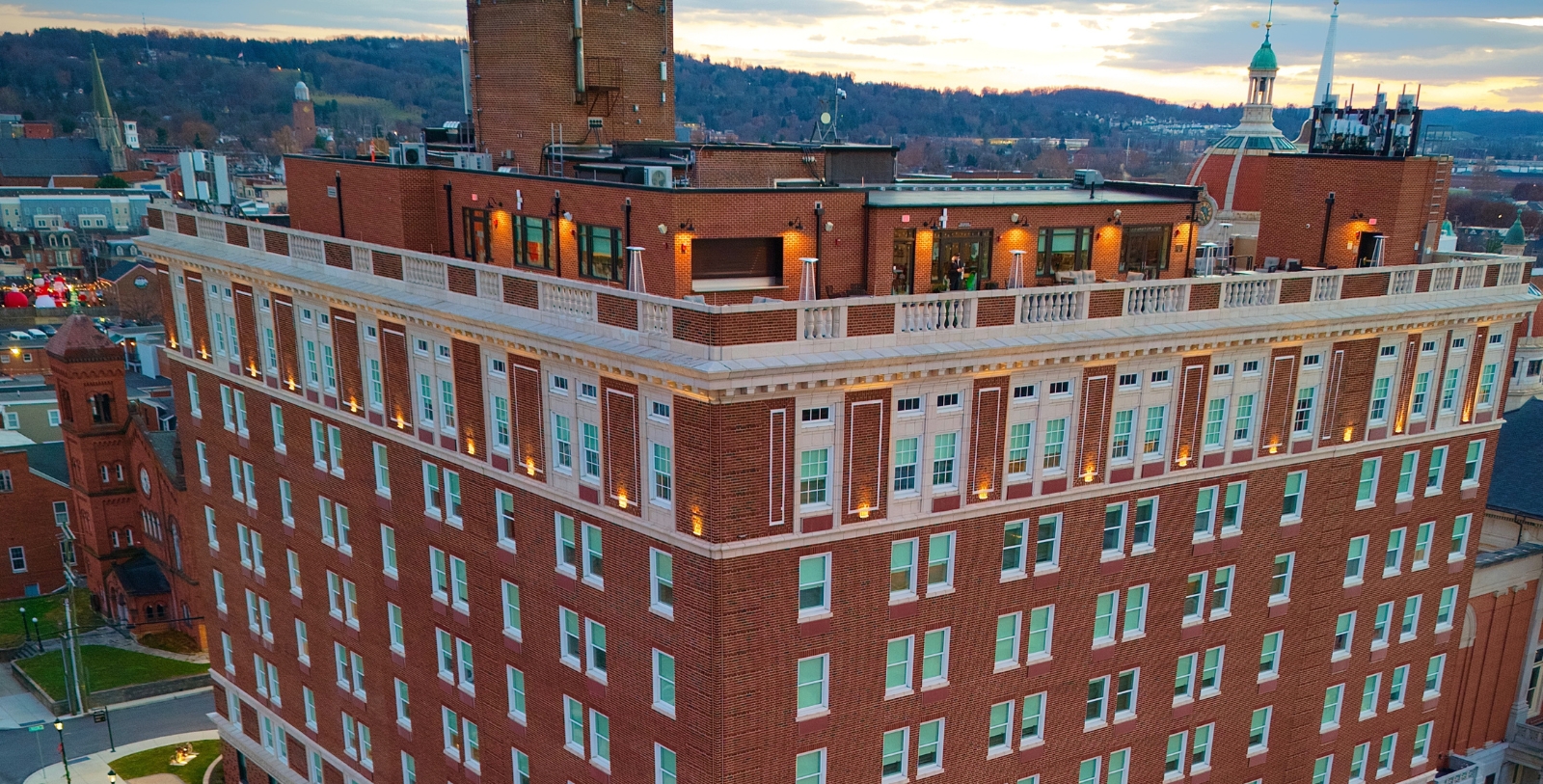
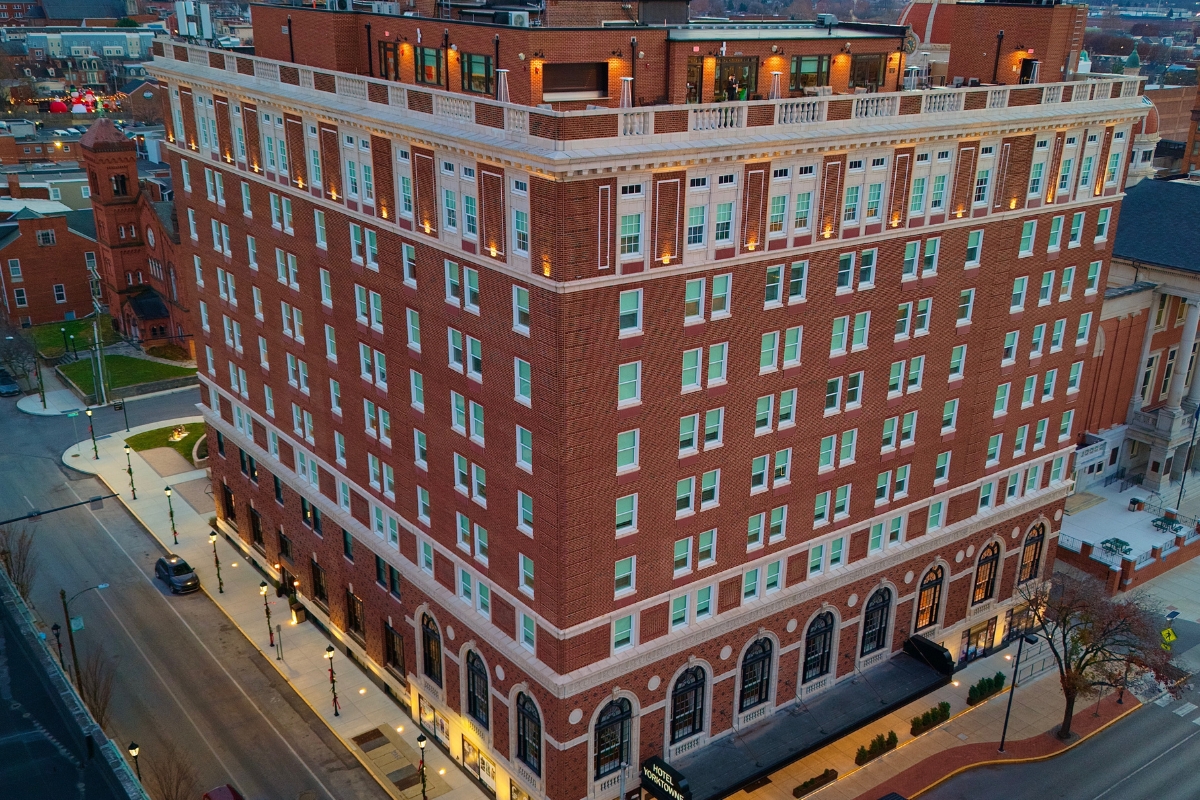
VIEW TIMELINEListed in the U.S. National Register of Historic Places as a contributing structure within the York (PA) Historic District, the history of The Yorktowne Hotel, Tapestry Collection by Hilton, began not with a single benefactor but the resolve of a whole community. In the wake of World War I, prominent businesspeople throughout York, Pennsylvania, decided that their industrious, modernizing city deserved a hotel equal to its ambitions. The York Chamber of Commerce thus convened with civic clubs and manufacturers to organize a one-week stock campaign for a new “community hotel”—a plan that would channel broad investment into a privately operated landmark. Within a matter of days, nearly 1,200 residents had invested more than $1.17 million—over $20 million today—for the project’s development fund and its manager, the Community Hotel Company. The Community Hotel Company then hired the prolific hotel architect William Lee Stoddart to create the nascent structure, who in turn designed a marvelous 11-story edifice at the corner of East Market and South Duke streets downtown. Gorgeous Renaissance-inspired motifs quickly came to define the young building’s breathtaking facade, such as tall arched windows, crisply detailed cornices, and elegant stonework formed its memorable appearance.
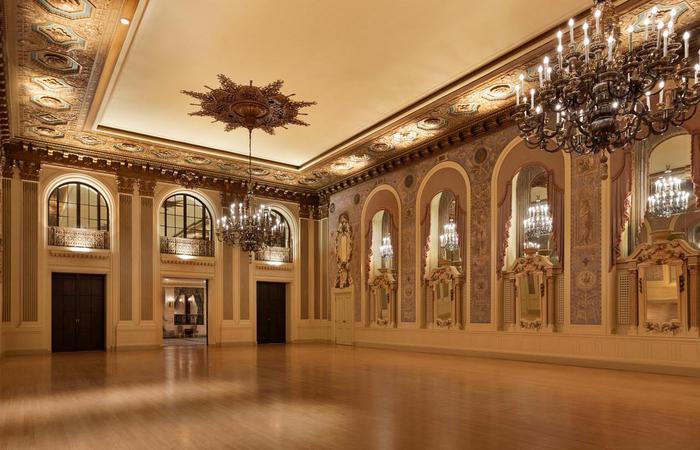
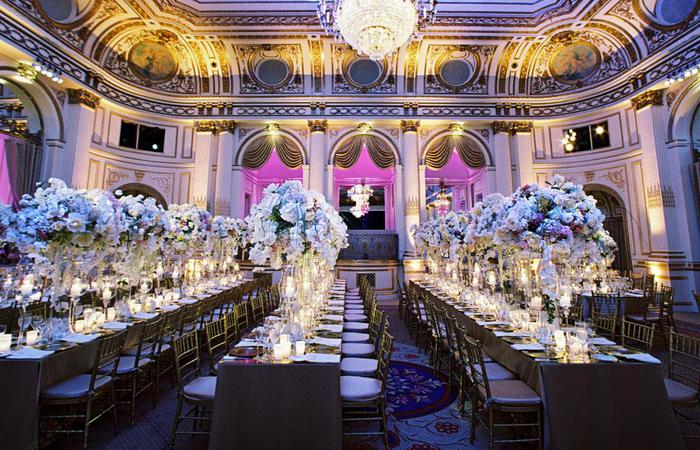
Named “The Yorktowne Hotel,” the business soon emerged as one of the most preeminent social gathering spots in the region following its debut in 1925. Indeed, the hotel immediately became a social crossroads of sorts, welcoming all kinds of distinctive travelers drawn by York’s proximity to major urban centers like Philadelphia, Baltimore, and Harrisburg. Much of its appeal stemmed from the fantastic features that guests could find on-site, including mirrored walls, crystal chandeliers, and graciously large guestrooms that were unrivaled in their size. As politicians and entertainers toured the area, those characteristics rendered the building a favorite place for them to frequent. In fact, some of the most renowned icons of the era would eventually seek out accommodation at The Yorktowne Hotel, including Frank Sinatra, Tony Bennett, and Lucille Ball. The hotel’s prestige continued to expand in the postwar decades, too, and by 1957, its success had even justified the completion of a significant extension. But the business faced headwinds in the latter half of the 20th century. As interstates redrew America’s roadmap, legacy urban destinations like The Yorktown Hotel found their clientele shifting to different locations.
Despite remaining a sentimental favorite for proms, wedding receptions, and reunion banquets, the structure nonetheless struggled to preserve its earlier prosperity and went into foreclosure. The Yorktowne Hotel subsequently fell into a state of disrepair around the beginning of the 21st century, forcing local preservationists to add it to a statewide list of at-risk historic buildings. Yet that designation would become a pivotal moment for the hotel’s story. Through the York County Industrial Development Authority, York leaders assembled a public private financing stack consisting of state grants, historic tax credits, and philanthropic gifts to fund a full rehabilitation. The renovations themselves started not long thereafter, ultimately taking several months to finish. Meanwhile, a parallel effort played out on the branding front, with the historic hotel securing an affiliation with Hilton’s Tapestry Collection. When the doors finally opened again in 2023, the entire community enthusiastically celebrated the hotel’s return. Hilton specifically marked the occasion as a corporate milestone—the 100th hotel in the Tapestry Collection—while city officials hailed it to be a community anchor polished for a second century. Now known as “The Yorktowne Hotel, Tapestry Collection by Hilton” today, the future of this spectacular historic destination has never been more secure.
-
About the Location +
York, Pennsylvania, began as a frontier outpost carved from the dense wilderness west of the Susquehanna River, a region that early settlers viewed with equal measures of opportunity and uncertainty. Laid out by surveyors Baltzer Spengler and Ulrich Whisler in 1741, the town quickly became the first organized colonial settlement beyond the river’s borders. The two surveyors had specifically chosen a key location along a tributary of the Susquehanna known as “Codorus Creek,” given its ability to function as a vital transportation network. Additional pioneers flocked to the site due to its proximity to the creek, which gradually increased the settlement’s size over the following decades. In fact, the two had grown to number more than 200 houses, as well as a county courthouse around the beginning of the 1750s! Its early years were shaped by the cultural mixture characteristic of colonial Pennsylvania. German, English, and Scotch-Irish settlers built farms, mills, and churches throughout the community, including the region’s first Lutheran congregation (organized in 1733). But the transformation of York from a prosperous frontier outpost into a temporary national capital occurred unexpectedly amid the American Revolutionary War.
In the fall of 1777, the Second Continental Congress fled Philadelphia following its capture by the British Army, briefly stopping in Lancaster before crossing the Susquehanna to the comparative safety of York. According to accounts from the time, the delegates deemed it wise to put the river between themselves and the enemy, choosing York as a secure refuge where the affairs of state could continue uninterrupted. From almost a year, York became the working capital of the emerging nation, hosting Congress in its courthouse and providing space for deliberations that would eventually shape the country’s political framework. The town’s modest size and frontier sensibility stood in stark contrast to Philadelphia’s grandeur, yet the work accomplished within York’s unassuming public buildings proved nothing short of foundational. During its nine months as the nation’s seat of government, York witnessed the drafting and ratification of the Articles of Confederation, the first governing document of the United States—a milestone that led some to call York the nation’s first capital. It was also here that Congress declared the first National Day of Thanksgiving and finalized the French Treaty of Alliance, a diplomatic achievement that brought France fully into the conflict.
Despite these pivotal events, York did not seize the popular imagination the way Valley Forge or Independence Hall would. The absence of dramatic military suffering or iconic architecture meant its contributions were often overlooked, even though the work completed in York helped sustain the war during one of its most precarious stretches. Nevertheless, daily life in York during Congress’s tenure blended the rhythms of a frontier community with the sudden presence of the nation’s political leadership. The Golden Plough Tavern, built in 1741, served as both a gathering place and lodging for travelers and delegates, its timbered rooms offering warmth, conversation, and news from the front lines. Nearby stood the home of General Horatio Gates, whose victory at Saratoga had made him a celebrated figure. Even as Congress debated and drafted critical legislation, York’s diverse inhabitants continued their work in agriculture, metalworking, and trade, contributing to the region’s enduring reputation for craftsmanship. When Congress finally departed in 1778, York did not fade into obscurity but instead continued its evolution alongside the growing nation.
Its identity as the “White Rose City,” drawn from the symbolic rivalry between England’s York and Lancaster, endured through the centuries, offering a reminder of the cultural threads woven into its founding. Over time, York expanded into a center of manufacturing and agriculture, raising crops such as barley, corn, and potatoes while nurturing industries that ranged from metal goods to machinery and, later, automobiles. Though larger cities would overshadow it in population and political power, York remained a place where American identity was not only declared but lived in the daily work of its people. Today, York’s colonial legacy is preserved through the York Colonial Complex and the York County History Center, where visitors can walk through reconstructed and restored buildings that echo with voices of the American Revolution. The courthouse reproduction, the Golden Plough Tavern, and the Gates House all stand as reminders that the nation’s enduring institutions arose not solely from grand halls, but also from the steady resolve of a frontier town committed to the ideals of independence. York’s story, rich with resilience, diversity, and quiet determination, remains one of the most compelling yet understated chapters in the early history of the United States.
-
About the Architecture +
The Yorktowne Hotel, Tapestry Collection by Hilton, displays some of the finest preserved Renaissance Revival architecture in all Pennsylvania. Renaissance Revival architecture—sometimes referred to as "Neo-Renaissance”—is a group of architecture revival styles that date back to the 19th century. Neither Grecian nor Gothic in their appearance, Renaissance Revival-style architecture drew inspiration from a wide range of structural motifs found throughout Early Modern Western Europe. Architects in France and Italy were the first to embrace the artistic movement, who saw the architectural forms of the European Renaissance as an opportunity to reinvigorate a sense of civic pride throughout their communities. As such, those intellectuals incorporated the colonnades and low-pitched roofs of Renaissance-era buildings with the specific characteristics of Mannerist and Baroque-themed architecture. Perhaps the greatest structural component to a Renaissance Revival-style building involved the installation of a grand staircase in a vein similar to those located at both the Château de Blois and the Château de Chambord in France’s Loire Valley. This particular feature served as a central focal point for the design, often directing guests to a magnificent lobby or exterior courtyard. But the nebulous nature of Renaissance Revival architecture meant that its appearance varied widely across Europe and eventually North America. Historians today sometimes find it difficult to provide a specific definition for the architectural movement. Regardless, Renaissance Revival architecture remains one of the world’s most enduring, appearing in countless places across the globe.
-
Famous Historic Guests +
Lucille Ball, actress best known for her roles as Lucie Ricardo in the hit television show, I Love Lucy.
Ozzie Nelson, musician and band leader who co-founded the program, The Adventures of Ozzie and Harriet.
Harriet Nelson, actress best remembered for co-founding the program, The Adventures of Ozzie and Harriet.
Ella Fitzgerald, singer known for her songs “Dream a Little Dream,” “A-Tisket, A-Tasket,” and “It Don’t Mean a Thing (If It Ain’t Got That Swing).”
Frank Sinatra, singer and actor part of the famous Rat Pat known for selling 150 million records worldwide
Ray Charles, musician who pioneered American soul music and created countless chart-topping singles.
Tony Bennett, musician known for such hits as “Because of You,” “Rags to Riches,” and “I Left My Heart in San Francisco.”
Glenn Miller, big band leader and composer best remembered as one of the most successful musicians of the 20th century.
Kay Kyser, band leader and radio personality best remembered for his show, Kay Kyser’s Kollege of Musical Knowledge.
Ginny Simms, actress known for her roles in movies like Here We Go Again and Broadway Rhythm, as well as performing as the lead vocalist in Kay Kyster’s big band.
Walter Cronkite, broadcast journalist best known for hosting CBS Evening News during the 1960s and 1970s.
Margaret Thatcher, Prime Minister of the United Kingdom (1979 – 1990).
Eleanor Roosevelt, First Lady of the United States (1933 – 1945).
Bill Clinton, 42nd President of the United States (1993 – 2001).
-
Women in History +
Eleanor Roosevelt: The Yorktowne Hotel, Tapestry Collection by Hilton, has hosted countless luminaries throughout its history, ranging from Hollywood celebrities to notable politicians. Among those illustrious individuals was former First Lady Eleanor Roosevelt. She was born Anna Eleanor Roosevelt to Elliott and Anna Hall Roosevelt in 1884. (A member of the Oyster Bay clan of the Roosevelt dynasty, Elliott was the brother of former U.S. President Theodore Roosevelt.) Roosevelt’s immediate family cherished community service—a value that was further reinforced when she attended the prestigious Allenswood Boarding Academy in London. She kept those personal influences close to her heart in adulthood, using them as the foundation for her future work as a social activist. Indeed, some of her earliest projects involved tending to the overcrowded tenement houses in New York City’s Lower East Side. Around the same time, she began courting her distant cousin, Franklin Delano Roosevelt. They married in 1905 and had six children together. But the marriage was strained by their dueling personalities, as well as the demands of Franklin’s early political career. Roosevelt often felt her responsibilities as a “political wife” were tedious, especially after her husband’s appointment to the post of Assistant Secretary of War shortly before the outbreak of World War I. Their marriage further deteriorated in 1918, when Eleanor discovered that Franklin had an affair with their mutual friend, Lucy Mercer. Roosevelt thus vowed to throw herselfback into her political activism.
However, the two had a strong understanding that their fates remained intertwined and aspired to support one another going forward. It was Eleanor who encouraged Franklin to remain in politics when he was beset with polio in 1921. Eleanor Roosevelt was incredibly instrumental in aiding her husband’s election as the Governor of New York in 1928, as well as his subsequent rise to the presidency four years later. She often gave numerous speeches in public on his behalf that galvanized thousands of people. Roosevelt also became a central figure at his campaign events, serving as her husband’s voice whenever he could not attend. But Eleanor Roosevelt still established her own vibrant political career as the First Lady of the United States. Historians today consider her actions to have fundamentally transformed the role that the First Lady traditionally held within the national government. Roosevelt used her position to advance several causes close to her heart, including gender equality, civil rights, and housing reform. For instance, she arranged a massive celebration at the nearby Lincoln Memorial to protest the racist decision of the Daughters of the American Revolution to not let Marian Anderson, an African American opera singer, perform at Constitution Hall. On another occasion, she privately lobbied for the passage of the Costigan-Wagner Bill, which would have made lynching a federal crime. Roosevelt even held exclusive press conferences at the White House for female journalists to help them to break into the field.
Perhaps her greatest efforts involved an attempt to create an experimental community in West Virginia called “Arthurdale,” where homeless miners would have a shot at achieving a new independent life. Even though many considered Arthurdale to be a failure, the town was nonetheless a testimony to her commitment to public service. Eleanor Roosevelt’s historic career continued well after her time at the White House ended upon Franklin’s death in 1945. She played a significant role in turning Hyde Park into a museum dedicated to her late husband’s legacy, which set a precedent for future presidential libraries to follow. She also served as a delegate to the United Nations Commission on Human Rights, rising to become its chairperson. Roosevelt remained with the organization until the early 1950s, and her political insight proved integral toward drafting the Universal Declaration of Human Rights. After working to reform New York politics throughout the remainder of the decade, Roosevelt eventually supported the campaign of John F. Kennedy. When Kennedy won, she became his representative to such organizations like the National Advisory Committee to the Peace Corps. President Kennedy even appointed her as the First Chair of the Presidential Commission on the Status of Women, although she would pass away mere months after it was organized. Eleanor Roosevelt has since been revered as one of the most influential figures in 20th-century American history and is esteemed across the world today for her years of advocacy.